
Japan
Japan travel guide
Temples, trains and food: the essentials for a first visit to Japan, including how to stay connected.
Published 2026-03-05 · Updated 2026-08-20
Overview
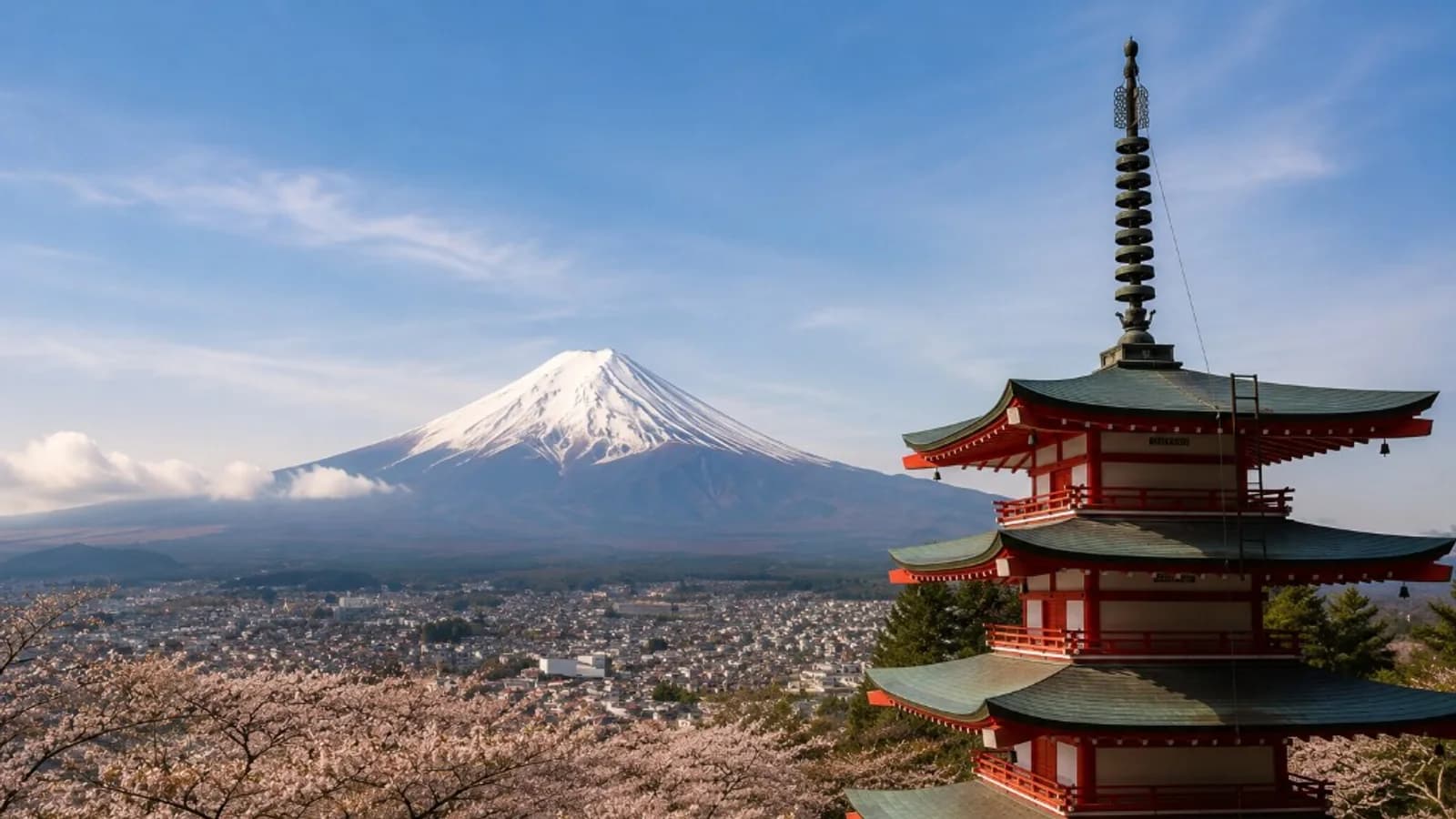
Japan is one of the easiest countries in the world to travel around once you understand the basics, and one of the most rewarding for people who like to plan. Tokyo and Osaka anchor most itineraries, with Kyoto's temples, Hiroshima's history, and the Japanese Alps as common additions. The country runs on punctuality — trains, meetings, and queues all operate with a precision that surprises many first-time visitors.
Late March to early April brings cherry blossom season, and late autumn (November) brings vivid foliage — both are peak travel periods with higher prices and bigger crowds. Summer is hot and humid, especially in cities; winter is mild in Tokyo but can bring heavy snow to the north and mountain regions.
Getting around
- The Shinkansen (bullet train) network connects major cities quickly; consider a Japan Rail Pass if you're covering long distances
- City metro systems in Tokyo and Osaka are extensive but can be confusing at first — a transit app with offline maps helps a lot
- IC cards (Suica, Pasmo, ICOCA) work across most public transport and convenience stores
- Trains run on time, and platforms and doors are clearly marked — but connections can be tight, so plan buffer time
Mobile data and connectivity
Install your BrisqNet eSIM before you leave so it's ready to navigate from the airport the moment you land — Japan's transit apps and translation tools are far more useful with a live connection. Check supported devices in our Help Centre if you're unsure whether your phone is eSIM-compatible.
- Coverage is strong across cities and along the Shinkansen route; some rural mountain areas and tunnels have gaps
- Convenience-store Wi-Fi and station Wi-Fi exist but often require registration — a working eSIM is usually simpler
- Translation apps rely on a live connection for the best results, so keep your data line switched on
Local etiquette and tips
- Carry cash — many smaller restaurants, shrines, and rural shops are still cash-only
- Remove your shoes where indicated indoors, including many ryokan (traditional inns) and some restaurants
- Talking loudly on phones on trains is considered rude; switch to silent mode
- Tipping is not customary in Japan and can cause confusion if offered
Choose data for Japan
Live BrisqNet plans for Japan, priced in your currency.
Data
3 GB
3 Days
3 GB · 3 Days
Data
5 GB
7 Days
5 GB · 7 Days
Data
10 GB
15 Days
10 GB · 15 Days
Visiting several countries in Asia?
View Asia plans →FAQs
Do I need a visa for Japan?
Many nationalities can enter Japan visa-free for short tourist stays, but requirements vary by passport. Check official Japanese government guidance before booking.
Will a BrisqNet eSIM work on the Shinkansen?
Coverage generally follows the Shinkansen route closely since it passes through populated corridors, though brief gaps in tunnels are normal for any mobile network.
Can I install my Japan eSIM before I leave home?
Yes — install the eSIM profile while you still have Wi-Fi at home, then switch on the data line once you land in Japan.
Also read our eSIM installation guide.